
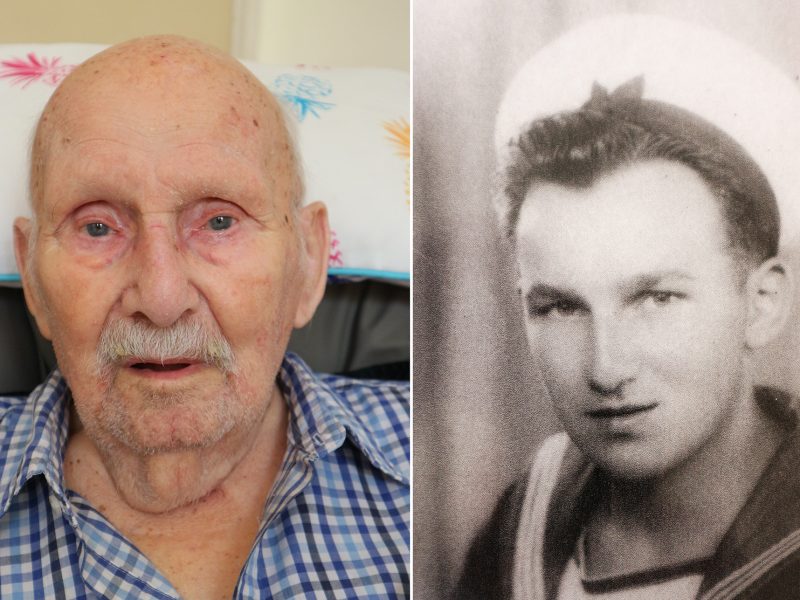
As the nation prepares to mark the 80th anniversary of VJ Day, the Voice met a veteran of the campaign in Burma, where fighting continued after the guns fell silent in Europe.
EARLIER this year communities around the country held events to commemorate 80 years since VE Day.
The date – May 8 1945 – is seared into the national memory as the day when a nation marked the final victory over Germany’s Nazi regime.
But the Second World War didn’t end then. Furious fighting continued for more than three months in Burma, China and across the Far East and Pacific until the dropping of atomic bombs on Hiroshima and Nagasaki forced the retreating Japanese empire to surrender.
Celebrated joyously then – but perhaps less well remembered now – August 15 was declared Victory over Japan or VJ Day, marking the final end of the Second World War.
Harry Francis fought in Burma – and does not have fond memories. Not only was fighting in the jungle “hell”, the last of his many encounters with Japanese forces left him close to death, after being stabbed in the stomach with a bayonet.
Harry, who has just turned 100, now lives in Soundwell with his wife Gwen.
Before the war he lived in the village of Barford St Martin, near Salisbury. Frustrated at seeing colleagues at the bus depot where he worked being given deferments when they received call-up papers, Harry lied about his age to volunteer in 1942, joining the Royal Navy when he was still 16.
After training at HMS Raleigh in Torpoint, Cornwall, he joined the crew of destroyer HMS Brecon, based in Liverpool.
HMS Brecon hunted U-boats and escorted convoys in the Atlantic, before being deployed to Malta in the Mediterranean. At this point Harry volunteered for the Royal Marines, going through a training programme at the Achnacarry Commando Training Depot in the Scottish Highlands, which he says had “some big tough men crying their eyes out”.
One of the first recruits in 1943 to what would become known as the Special Boat Service (SBS), Harry fought in Sicily and Italy during the Allied invasion and took part in raids on Lebanon, which was run by the Vichy France government.
During the visit Tito – later to become Yugoslavia’s president – presented Harry with a medal, from a bunch that he kept in his pocket to present to soldiers.
Harry no longer has the medal but it is believed to have been the Yugoslavian equivalent of the Military Medal.
Soon afterwards Harry and his comrades in No. 2 SBS were given new orders to go to the Far East.They sailed to Ceylon – now Sri Lanka – and from there were sent to the Andaman Islands, between India and Burma, for their first experience of fighting the Japanese.
Harry’s unit then went to Burma, operating as part of South-East Asia Command’s Small Operations Group, and he admits being “frightened to death”. Fighting in the jungle, often at close quarters, and shooting snipers down from the trees, Harry says the enemy soldiers were “crafty” and refused to surrender.
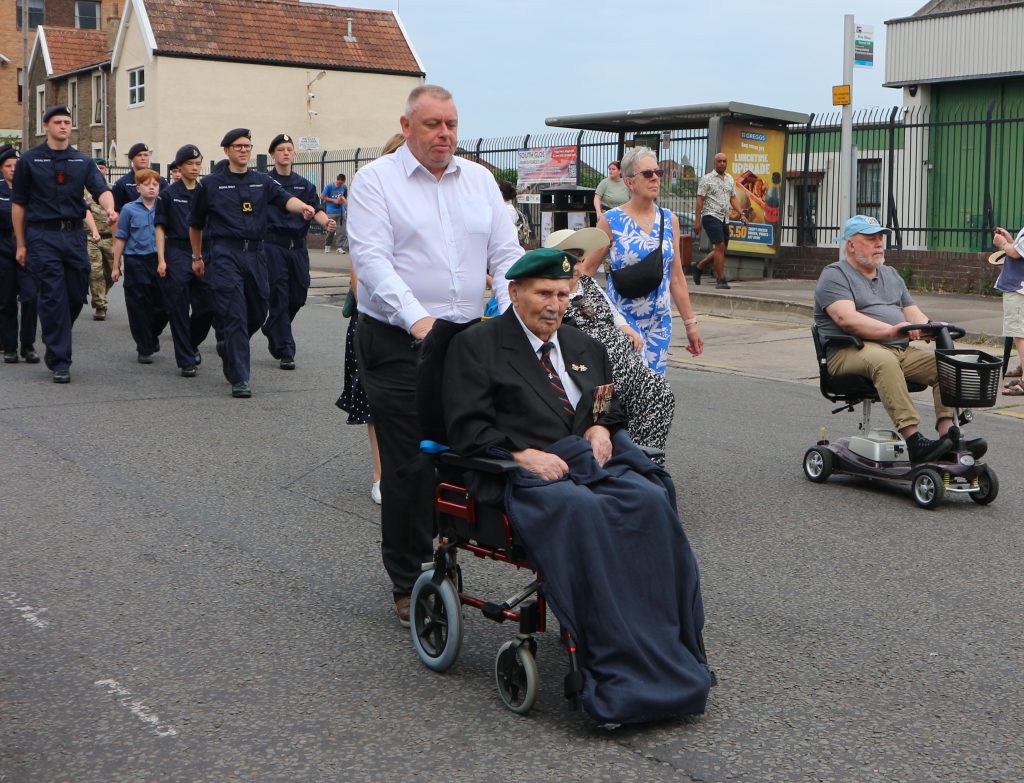
He said: “It was either you or them. We had a bloody hard time out there. It was bad enough fighting the enemy but when you’ve got to fight the jungle as well, it’s hell – it was a bloody horrible place.”
Harry and his comrades would swim up on paddle boards to carry out reconnaissance on Japanese units. Operating around the Irrawaddy river, they carried out lightning raids, going in and “getting out quick”.
Harry said: “I was a mad sod, who went in all guns blazing. We’d do whatever we had to and get out.”
Harry completed six missions, often returning and having a day to “get cleaned up and be off out again”.
On his seventh reconnaissance mission Harry’s group was ambushed. Two of his comrades were “shot to pieces” and, as Harry ran to help, he had “the biggest bayonet I’d ever seen” thrust into his stomach.
His best friend Slim Fenton killed the Japanese soldier who stabbed him. After their attackers were wiped out he was carried back to an outpost, “bleeding like a stuck pig”.
He lost consciousness and say the next thing he remembers is “waking up in a nice bed with white sheets” in Ceylon.
Transferred to the UK, Harry was treated at Haslar hospital in Gosport for peritonitis, a potentially-fatal infection caused by the wound, then sent to recuperate at Netley camp in Hampshire.
He was in the UK on VJ Day, when the war finally ended on August 15, 1945.
Once he was back on his feet Harry was put on light duties, helping to train others until he was demobbed.
He worked as a labourer then took up painting and decorating, a trade he stayed in until he retired, and moved to Bristol around 40 years ago.
He stayed in touch with some of his comrades, but most have now passed away.
Even at the end of the war, Harry says “no-one wanted to know” about the conflict in the Far East, and far fewer do now.
He said: “They don’t know what we went through. They say ‘we will remember them’ but no-one ever bloody does! People should remember. But don’t say that I’m a hero, because I’m not – I’m just one of the boys.”