
FUNDING has yet to be found to build a bridge over the River Avon from Hanham to Keynsham – a year after the scheme won planning approval.
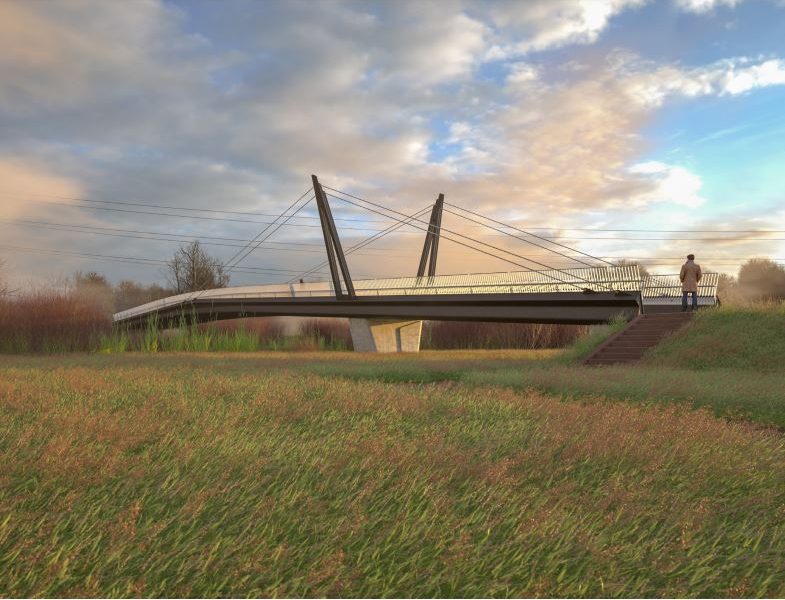
The proposed bridge would allow pedestrians, cyclists, wheelchair users and horse riders to cross the river, which forms the border between South Gloucestershire and Bath & North East Somerset.
It is a shared project between the two district councils, which both granted planning permission for the bridge last summer.
At the time, B&NES Council told the Voice that a potential timescale for construction was still to be confirmed because funding to deliver the scheme had not been secured.
But the council added that, by having a detailed design and planning consent, it would be able to progress funding bids and grant applications.
However, little significant progress appears to have been made since.
Councillor Sarah Warren, deputy leader and cabinet member for sustainable transport on Bath & North East Somerset Council, recently told the Voice: “Planning permission for the bridge was obtained on both the South Gloucestershire and B&NES side last year.
“The council continues to explore funding options to progress it to construction. At present no specific external grant source has been identified.”
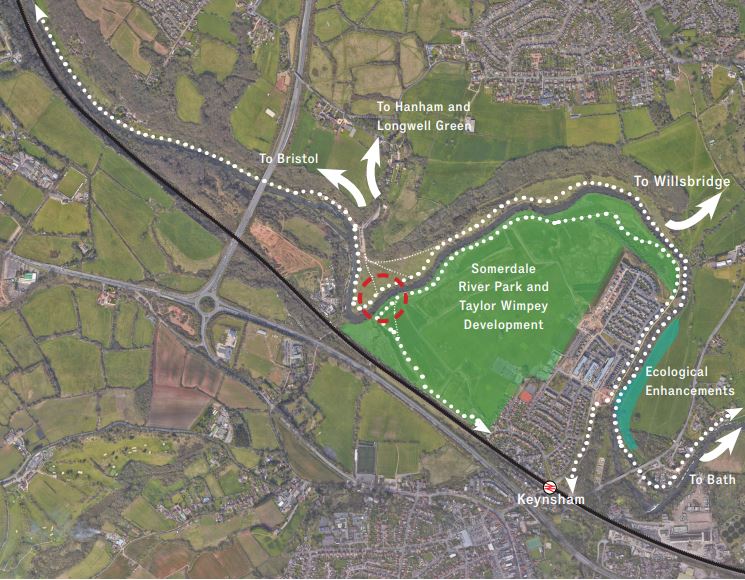
The bridge, spanning the river from south of the Chequers Inn at Hanham to a point near Durley Lane in Keynsham, would be 40 metres long and up to 4.3 metres wide, with a rubber-tiled surface suited for horses.
It has been designed by Buro Happold, the lead consultant, and Moxon Architects.
For the planning stage, funding contributions were made by the West of England Combined Authority as well as Taylor Wimpey, as part of its development of the Somerdale estate.
The bridge is part of the WaterSpace Connected programme, which aims to enhance the River Avon corridor between Bath and Bristol for people and nature.
The proposal attracted numerous comments of support from members of the public on both sides of the river during the planning stage, with supporters welcoming the fact that it would promote active travel in a safe way while connecting to wider routes.
South Gloucestershire Council said in its submission to B&NES Council that the main issue in planning terms was the potential impact on the green belt.
But it concluded there was “clear and convincing rationale” for the bridge to be built at that location, as it would encourage access into the countryside, link to the Bristol and Bath Railway Path, and promote more sustainable modes of pedestrian access.